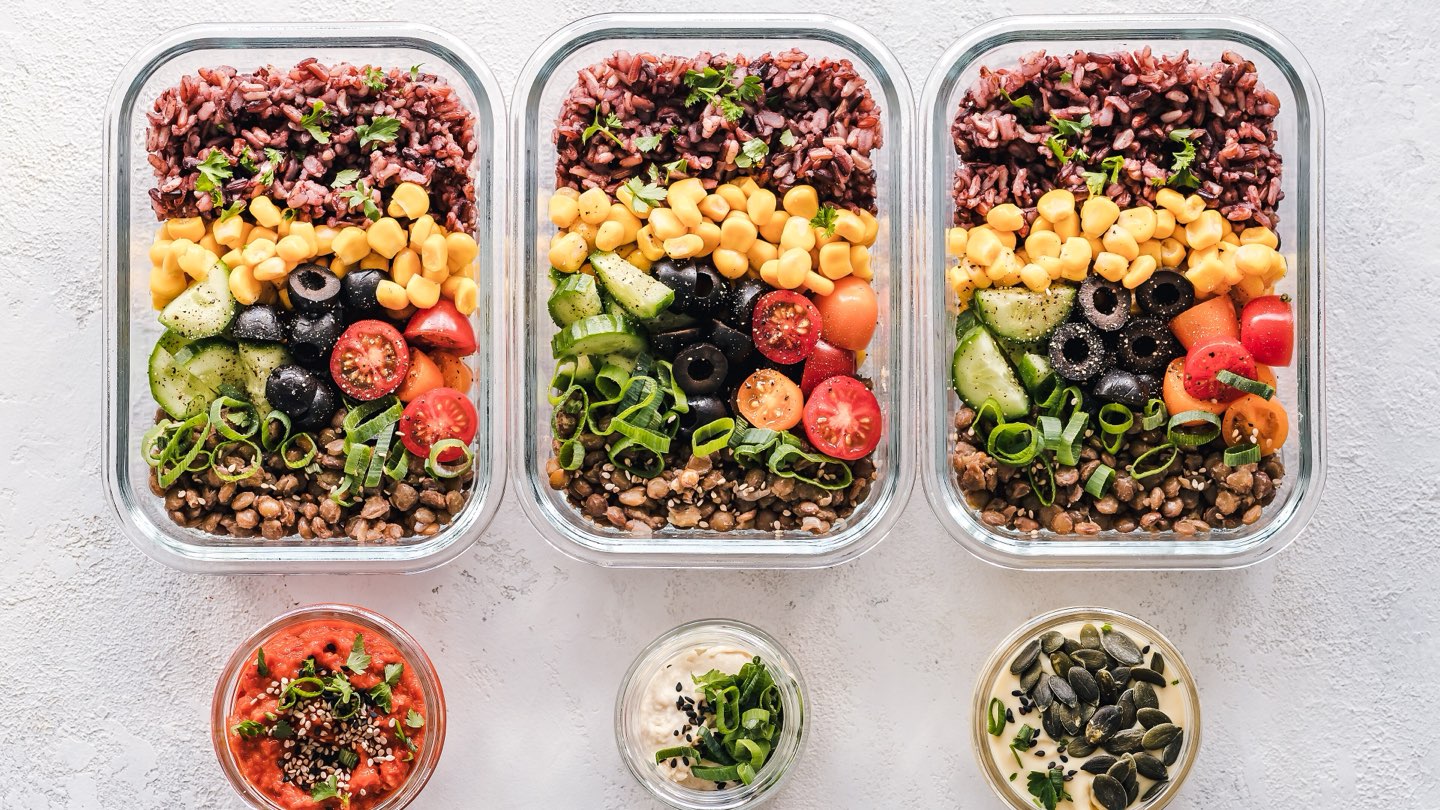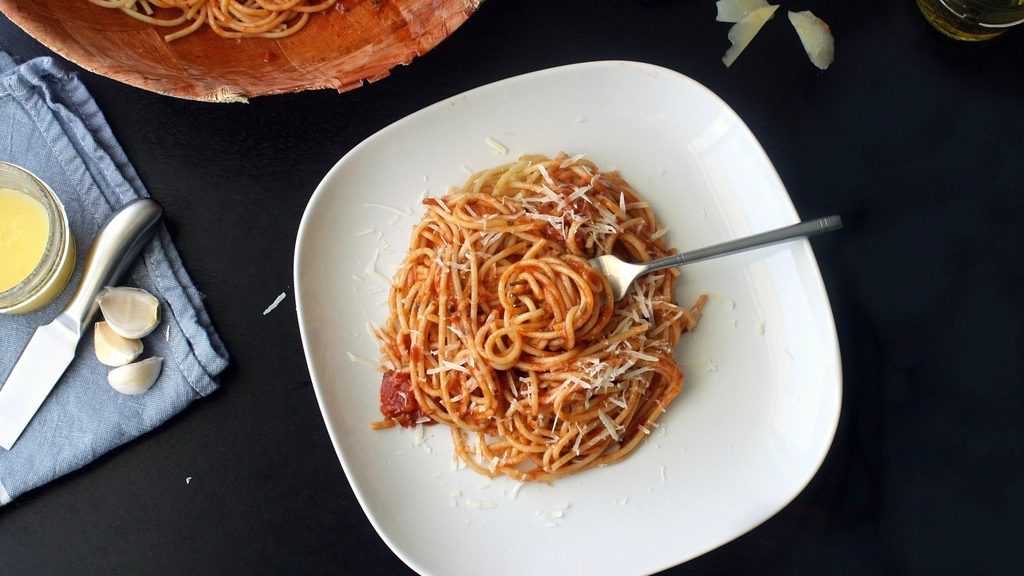
Meal planning for two works best when you stop halving every recipe. A recipe that makes four servings is dinner for both of you tonight and dinner again later in the week, so four recipes can cover seven dinners. Pick the dishes together, put the second servings on the nights you're busiest, and shop from one list written in quantities.
Why is cooking for two its own planning problem?
Two reasons. Recipes and packages are often sized for a family, so a couple either halves everything or ends up with extra food and no plan for it. And two people bring two sets of tastes and two schedules, which a plan has to fit.
The cost difference is real. The USDA Food Plans for September 2026 price food at home for people in four-person households and suggest adding 10 percent per person for a two-person household. For two adults aged 20 to 50, one woman and one man, that works out to $145.42 a week on the Thrifty plan and $186.45 a week on the moderate-cost plan. Our guide to a grocery budget for two goes further on the monthly numbers.
Should you halve recipes or cook the full amount?
Cook the full amount when the dish reheats well, and halve it when it doesn't. That one decision is what turns four cooking nights into seven dinners.
| Dish | What to do | Why |
|---|---|---|
| Soups, stews, chili and curries | Cook the full recipe | They reheat well, and the second meal tastes as good as the first |
| Casseroles and baked pasta | Cook the full recipe | Same pan, same effort, and the second meal only needs reheating |
| Roast chicken or braised meat | Cook the full recipe | The second meal can change shape, such as tacos or a grain bowl |
| Fish and quick stir-fries | Halve it | Fish dries out and crisp vegetables soften when reheated |
| Salads with dressing | Halve it, or dress only what you eat | Dressed greens go limp overnight |
| Anything crisp or fried | Halve it | Reheating rarely brings the crunch back |
When you do halve a recipe, use a smaller pan so the food isn't spread thin, and check for doneness rather than trusting the original time. Add salt and spices at half, then taste and adjust.
What does a week of dinners for two look like?
Here is one way to lay out four recipes over seven nights:
| Day | Dinner | Where it comes from |
|---|---|---|
| Monday | Recipe A | Cooked tonight, 4 servings |
| Tuesday | Recipe B | Cooked tonight, 4 servings |
| Wednesday | Recipe A | Monday's second meal |
| Thursday | Recipe C | Cooked tonight, 4 servings |
| Friday | Recipe B | Tuesday's second meal |
| Saturday | Recipe C | Thursday's second meal |
| Sunday | Recipe D | Halved, cooked tonight, 2 servings |
Every second meal is eaten two or three days after it was cooked, and no dish lands on back-to-back nights. Put the reheat nights where your week is hardest. If Wednesday is the night you both get home late, that's where Monday's extra servings belong. Sunday's halved recipe is a good slot for fish or a stir-fry.
To cover lunches too, cook one of the full recipes at six servings instead of four and pack the extra two the next morning.
How do you plan when you like different food?
Most couples don't need two separate plans. They need a few ways to share one.
- Take turns picking. Each of you chooses one or two dinners a week, and you choose the rest together.
- Share the base, split the toppings. Tacos, rice bowls, baked potatoes and pasta with two sauces let each person build their own plate from one pot of cooking.
- Keep a short list of dinners you both like. Pull from it when neither of you has a strong opinion.
- Plan around an allergy, not beside it. If one of you has a food allergy, build the shared meals without that ingredient and check the label on everything you buy.
If one dish keeps going uneaten by one of you, take it off the list rather than cooking it again.
How do you plan the week, step by step?
- Check the fridge, freezer and pantry together, and note anything that needs using in the next few days.
- Compare schedules. Mark the nights either of you is out, home late or eating elsewhere.
- Pick four dinners, using the turn-taking or shared-list approach above.
- Decide which recipes to cook in full and which to halve, using the table above.
- Put meals on days: delicate produce early in the week, reheat nights on your busiest evenings.
- Write one shopping list in quantities, and combine ingredients that appear in more than one recipe.
- Split the jobs. One of you can plan and the other shop, or you can alternate cooking nights. Reheat nights need no cook.
Keep the plan somewhere you both see it, so neither of you buys dinner on the way home by mistake.
How long do the second servings keep?
Plan to eat them within 3 to 4 days, the fridge time in USDA's leftovers guidance, which adds three habits worth building into a plan like this:
- Refrigerate cooked food within 2 hours, or within 1 hour when it's above 90°F outside.
- Divide large batches into shallow containers so they cool quickly.
- Reheat leftovers to 165°F, measured with a food thermometer.
If plans change and a second meal won't get eaten in time, freeze it. FoodSafety.gov's cold storage chart lists soups and stews at 2 to 3 months in the freezer and cooked meat or poultry at 2 to 6 months. Those freezer times are for quality; the chart notes that food kept frozen at 0°F or below stays safe indefinitely. Once frozen leftovers are thawed, the same USDA page says to use them within 3 to 4 days.
For more on building a plan you'll actually follow, see our guide to planning a week of meals. For keeping the shopping trip on budget, see how to stick to a grocery budget, and for what home cooking costs overall, the real cost of eating well.
Where MealMaxx fits
MealMaxx plans breakfast, lunch and dinner for the week around your grocery budget, saves extra servings as leftovers and can plan them into a later meal, and lets you swap any planned meal.